What Is EMS?
Electricity your brain already uses.
Your brain already sends electrical signals to make your muscles contract. EMS adds more of those signals from the outside. You wear a suit positioned over your major muscle groups, and while your coach guides you through real movements, the suit adds pulses that create extra contractions in those same muscles.
You move.
The suit stimulates.
Your coach controls the intensity.
That's EMS.
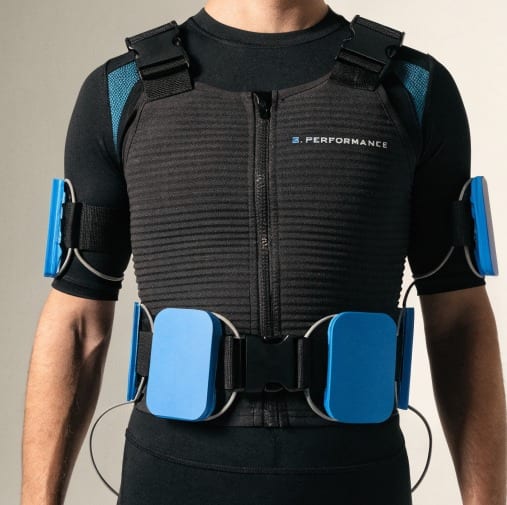
What It Does For Your Body
Training activates your nervous system and can trigger the release of endorphins — the same feel-good chemicals behind a great workout. Many members leave a session calmer and more focused, not just tired.
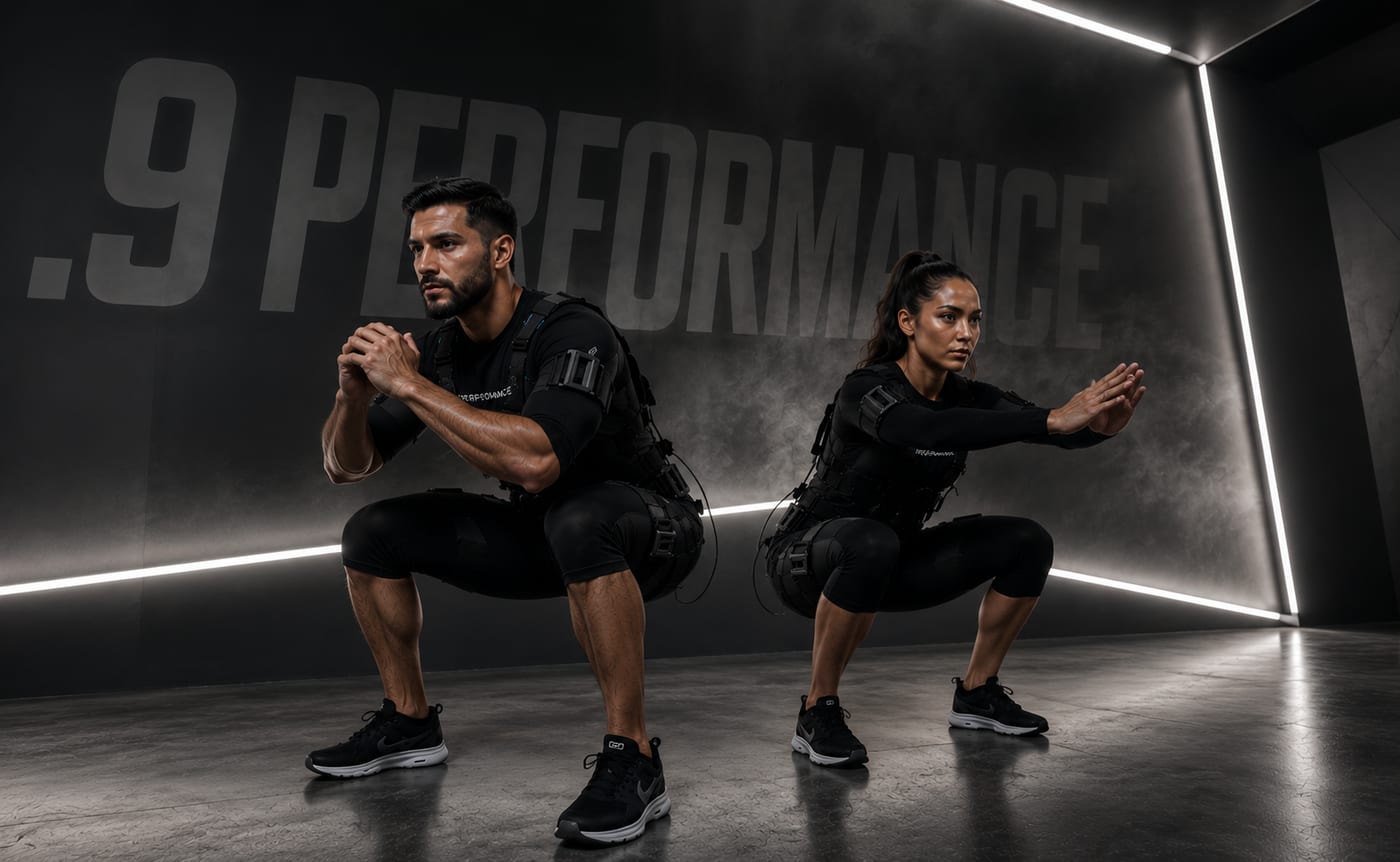
You still have to work.
EMS isn't lying down while electricity builds your body for you. You're squatting. You're lunging. You're pressing. You're moving. EMS adds stimulation to the work you're already doing — it doesn't replace it.
The Science
Not magic. Muscle stimulation.
EMS isn't magic — it's muscle stimulation. Electrical pulses cause your muscles to contract, and whole-body EMS combines that with guided movement across multiple muscle groups at once. Research has looked at whole-body EMS for outcomes like muscle function, strength, and body composition, though the strength of evidence varies by outcome. We treat it as a serious training tool, not a shortcut.
Traditional Gym
9. Performance EMS
Safety First
Performance second.
Every new member completes a screening before their first session. Your coach adjusts and supervises every session individually.
We'd rather you know the real risks than pretend there aren't any. Owning it builds trust.